Get In Touch: +971
(4) 422 7272
Model Registration: +971
50 4231446
For Client Enquiries: +971
55 3421613
Write to Us: enquiry@divadubai.com

News & Blogs
By Admin on Jun 23, 2026
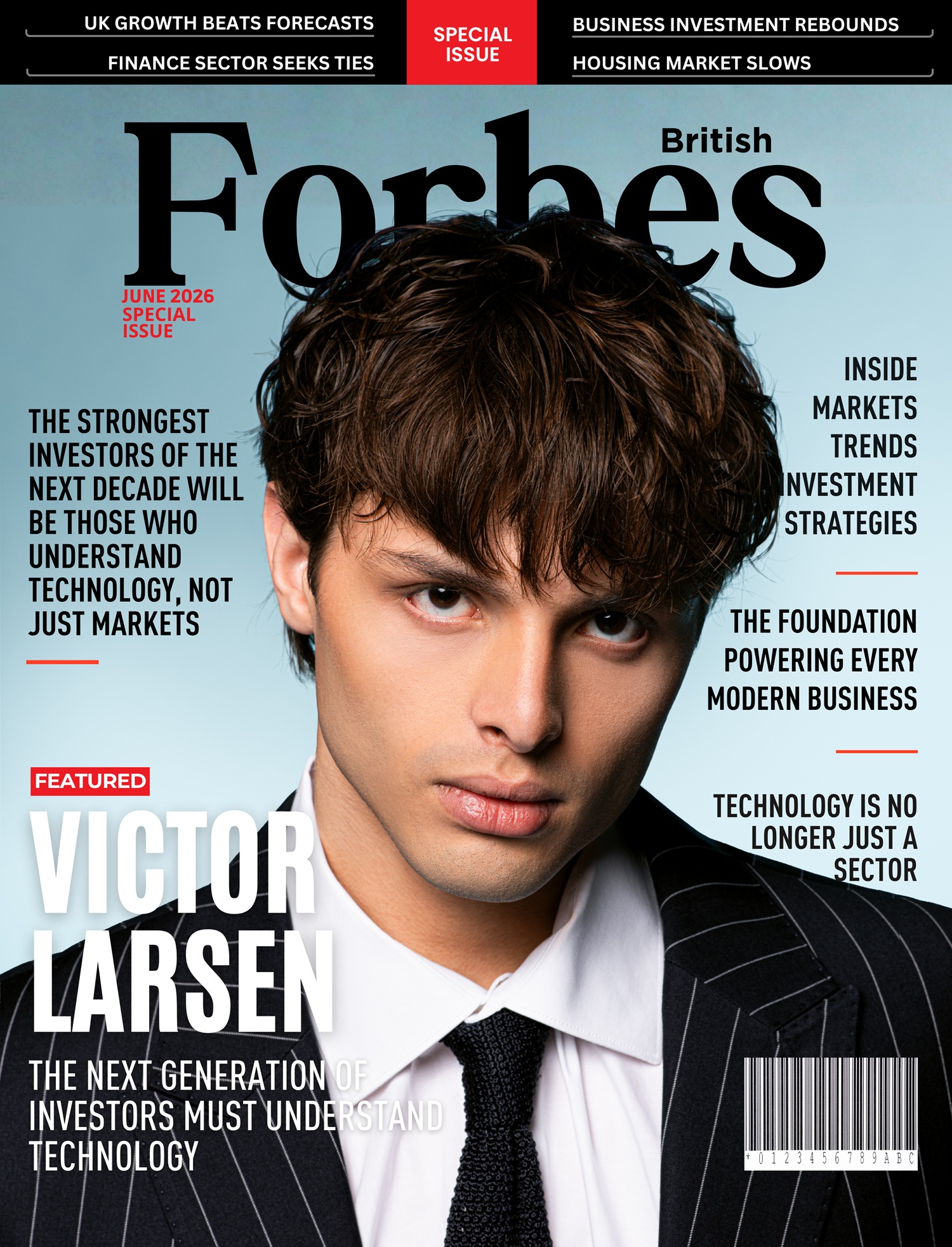
Victor Larsen On Why The Next Generation Of Investors Must Understand Technology
Victor Larsen shares why the next generation of investors must understand technology, AI, automation, and digital infrastructure to identify opportunities and lead in a rapidly evolving global economy.
The strongest investors of the next decade will not only be the ones who understand balance sheets, valuations, and market cycles. They will be the ones who understand technology.
Artificial intelligence, automation, infrastructure, software, data, and digital platforms are no longer isolated sectors within the economy. They are becoming the foundation of how almost every industry operates. From real estate and finance to luxury, logistics, healthcare, media, and hospitality, technology is no longer a separate category. It is the operating system of modern business.
For Victor Larsen, a Dubai-born entrepreneur and investor currently studying at Babson College, this shift represents one of the most important lessons for young business leaders today.
“The next generation of investors cannot only look at companies from the outside,” Victor says. “You need to understand what is powering them underneath. Technology is becoming the infrastructure behind almost every serious business.”
It is a view shaped by his global upbringing, his exposure to traditional business through Diva Group, and his current experience with Pvotal Technologies, a company operating in the world of infrastructure, automation, and modern enterprise technology.
Victor’s perspective reflects a broader shift in how young investors are beginning to think. In the past, investing was often seen through the lens of sectors: property, retail, banking, energy, consumer goods, or technology. Today, those lines are increasingly blurred. The best companies are rarely successful because of one factor alone. They win because they combine brand, distribution, technology, timing, leadership, and operational discipline.
For young investors, understanding that combination is becoming essential.
Technology Is No Longer Just a Sector
For years, technology was treated as its own investment category. Investors could choose to be “tech investors” or avoid the space entirely. That distinction is becoming outdated.
A real estate company may now depend on data, digital leasing platforms, smart building systems, and AI-driven customer acquisition. A fashion brand may rely on e-commerce infrastructure, supply chain technology, customer analytics, and social media algorithms. A financial institution may be built around software, automation, cybersecurity, and digital onboarding. Even hospitality and luxury businesses increasingly depend on digital systems to manage reputation, operations, and customer experience.
This is why Victor believes young investors need to look beyond surface-level labels.
“People might say a company is in real estate or hospitality or finance, but behind the scenes, technology is often what determines how efficiently it grows,” he says. “If you do not understand that layer, you are missing part of the business.”
This belief has influenced how Victor studies companies and opportunities. Rather than only asking what a business sells, he is more interested in how it operates, how it scales, how defensible it is, and whether it can adapt to the next stage of the market.
That mindset has become especially important in a world where artificial intelligence is beginning to reshape entire industries.
AI Has Changed the Investor’s Responsibility
Artificial intelligence has become one of the most discussed themes in global markets, but Victor believes many people still look at it too simply.
For him, AI is not only about chatbots, productivity tools, or consumer applications. Its real importance lies in how it will change workflows, decision-making, cost structures, and company efficiency.
Businesses that use AI properly may be able to operate faster, reduce repetitive work, improve customer experience, and make better decisions using data. Businesses that ignore it may find themselves competing with companies that are structurally more efficient.
This creates a new responsibility for investors.
It is no longer enough to ask whether a company has revenue, brand recognition, or growth potential. Investors must also ask whether the company understands how technology can improve its model. Is it adapting? Is it becoming more efficient? Is it using software, automation, or AI in a meaningful way? Or is it relying on old systems while competitors become faster and leaner?
Victor sees this as one of the defining questions for his generation.
“The companies that survive are not always the companies that look strongest today,” he says. “They are the ones that can adapt. AI makes adaptability even more important.” Read more : https://forbesbritish.com/victor-larsen-on-why-the...
Popular posts

Denmark Celebrates a Historic Year with Two International Crowns: Miss Supranational Europe 2024 and Miss Universe 2024Denmark has made its mark on the global pageantry stage, achieving a remarkabl...

Becoming a fashion model is a dream for many, filled with the allure of glamorous photoshoots, international travel, and runway shows. However, the journey from aspiring model to a professional one...
Recent posts
Jul 11, 2026
Jul 06, 2026